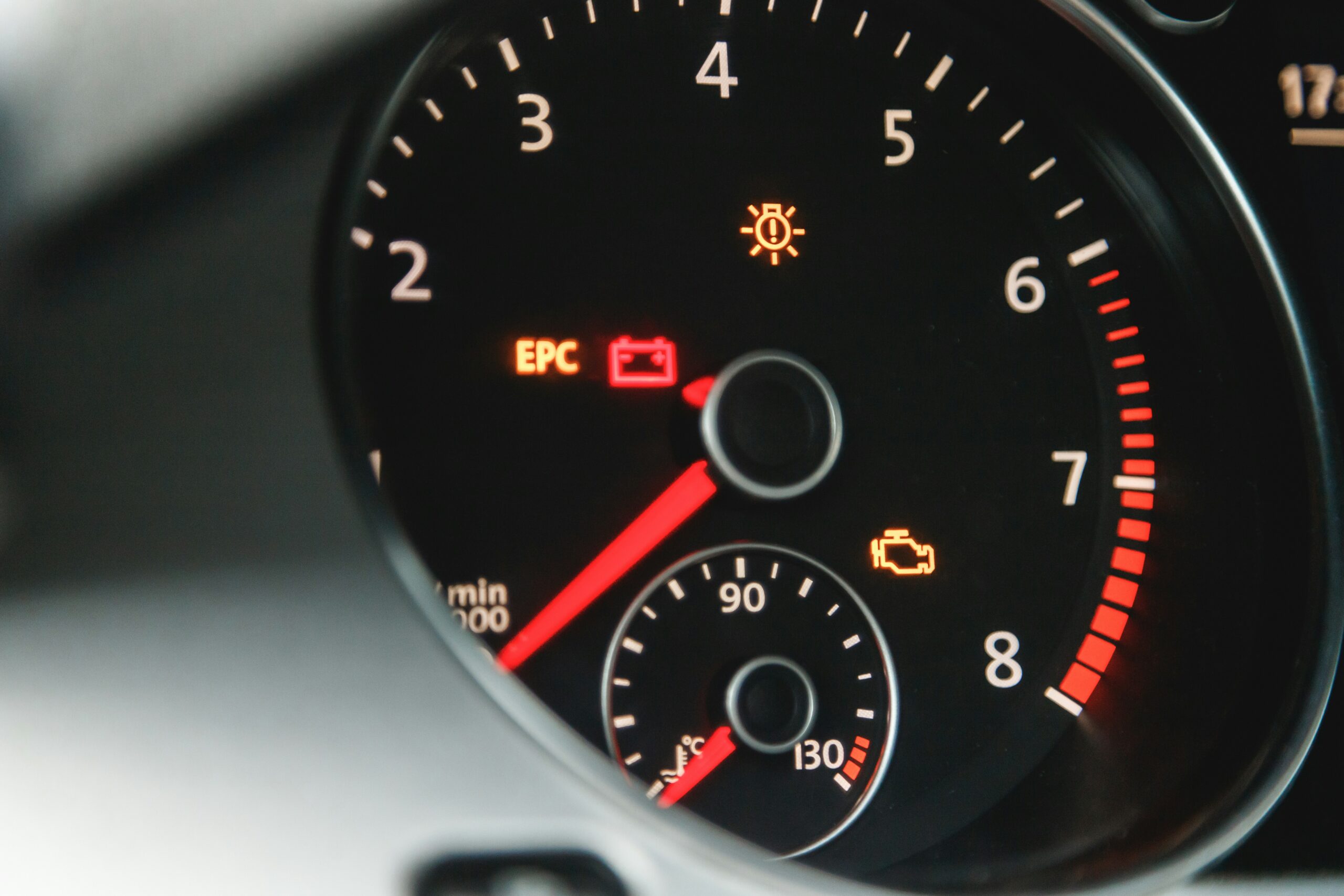
The familiar glow of a check engine light can turn a mundane drive into a looming question of what else could be wrong in your automobile. Whether something severe is happening with your vehicle relies on several factors including what illuminated your light and its appearance on your dashboard as well as your automobile’s performance.
The dashboard warning does not identify one specific failure. Instead, the vehicle’s onboard diagnostic system has detected a condition that may need investigation. Some check engine light causes are relatively simple, while others can involve components that affect engine performance, emissions, fuel delivery, or catalytic-converter operation.
The best possible response doesn’t involve guessing what the dashboard symbol means. You should identify whether the light is flashing or solid, look for symptoms and have diagnostic trouble codes retrieved when necessary.
What Does the Check Engine Light Mean?
The warning symbol that typically looks like an engine is called the malfunction indicator lamp (MIL). The system on vehicles is hooked up to onboard computers. Many of the parts of a vehicle send data to a computer that monitors many aspects of the vehicle; if there is something out of limits, a trouble codewill be detected, which will cause the warning light to turn on.
The light only provides a warning; it does not describe the malfunction itself.
Two vehicles can even come up with the same code but require two totally different repairs.
Common Check Engine Light Causes
Some issues are common enough for all car makers, but may differ for various car models, engines, and diagnostic systems.
Loose or Damaged Gas Cap
A gas cap that is loose, improperly installed, or damaged in any way can cause a fuel vapour leak.
Due to the fact that the modern cars are equipped with complex emission control systems, the check engine light will be turned on.
That is why checking the gas cap is a logical first step in diagnosing the problem if the car is driving normally.
If the cap was removed while filling the tank, ensure that it is tightened properly according to the manufacturer instructions.
If the check engine light is still on, do not attempt to ignore it, as there may be other issues.
Oxygen Sensor Issues
Oxygen sensors are crucial for the proper functioning of the engine.
They relay information about the amount of oxygen in the tailpipe to the engine computer, which in turn adjusts the air-fuel mixture depending on the needs of the engine.
The malfunction of the oxygen sensor will affect the engine performance and fuel economy.
The oxygen sensor can be dirty or faulty; in any case, a professional mechanic should examine and test the sensor before attempting to replace it.
Catalytic Converter Issues
A catalytic converter is a part of the exhaust system, and it is responsible for reducing emissions.
If the catalytic converter has failed, the check engine light will be turned on.
The engine may also knock or hesitate due to some issues with exhaust flow.
The catalytic converter is a very expensive component, and it is vital to determine why it has failed before spending a lot of money on its replacement.
A misfiring engine can lead to catalytic converter failure, and the problem should be addressed in time.
Spark Plug / Ignition Issues
Spark plugs and other ignition system components play a critical role in the combustion process of the petrol engine.
Any issues with the spark plugs, coil pack, or other parts in the ignition system can cause the engine to misfire.
The misfiring engine not only affects the performance of the car but will also burn the catalytic converter.
You may notice:
- Rough idling
- Shaking
- Hesitation
- Reduced acceleration
- Poor fuel economy
- Difficulty starting
A severe misfire can require prompt attention, particularly when the check engine light is flashing.
Mass Airflow Sensor Problems
How it works The mass airflow (MAF) sensor reads the amount of air entering the engine. How the airflow readings can affect your engine Failure to send correct air volume data through your MAF can send your car’s fuel injection and engine computer into a tailspin that results in your engine performing incorrectly. Here’s a rundown of what symptoms you might experience: -Engine hesitates or runs roughly at idle. -Car hesitates when accelerating. -Engine may not have the power it usually has. -May experience strange fuel consumption patterns.
Don’t assume a fault in your air flow system is automatically a failing sensor though.
Sometimes even problems like disconnected sensors or a dirty maf sensor or an air intake leak can cause the exact same set of conditions.
Vacuum or Intake Leaks
An unmetered air leak into the intake system can cause the expected amount of air to fuel to be altered for the engine. The effects can vary but could cause any one or combination of rough idle, hesitation, increased engine speed, and diagnostic trouble codes, varying between makes and models. If diagnosing symptoms like these, a technician would often look for hose leaks, loose intake components and seals.
Fuel Injector Problems
Engine injectors supply fuel to your engine based on signals from your car’s computer. Leaky, contaminated, electrically bad or even just mechanically bad fuel injectors can cause problems with the combustion process and interfere with how the engine runs, leading to such symptoms as rough running, engine misfires, and sluggish acceleration and decreased fuel mileage. If any of the symptoms of faulty injectors mimic the symptoms of engine ignition or air supply problems, it’s important that the correct causes can be pinpointed.
Why Is My Check Engine Light Flashing?
A flashing check engine light is generally more urgent to investigate than a static one. A blinking light can be caused by a major misfire or other issue that may produce severe harm to your vehicle’s emissions system. If your check engine light is flashing and your engine isn’t running at its best (rough running, shaking, loss of power), you should not continue driving in the manner You can usually continue driving without putting the vehicle at greater risk of developing a more serious problem.
Turn down the vehicle load and seek repair at a certified shop as soon as practicable; if the vehicle is uncontrollable or the situation is risky, discontinue driving and seek proper towing services and any required vehicle maintenance.
A flashing light is not meant to be a “next-time” message you can ignore until your regular maintenance schedule.
What Does a Steady Check Engine Light Mean?
A solid light most of the time means the computer has found an issue that is worth looking at. It doesn’t necessarily mean you are about to stop running. If it is running fine, check simple things that are easily identifiable such as if your gas cap has clicked properly, but be sure to get it diagnosed and don’t think it will go away for ever.
The urgency increases if the vehicle develops:
- Loss of power
- Rough running
- Strange noises
- Overheating
- Strong fuel odors
- Smoke
- Difficulty starting
- Significant changes in fuel consumption
The combination of the warning light and the vehicle’s symptoms provides more information than the light alone, especially when following a vehicle inspection checklist.
Driving With the Check Engine Light On: What to Know
Sometimes but again depends on what the light is warning you off of, and how the vehicle responds to the warning light. A solid light with no really noticable loss in drive-ability may be less concerning than a flashing light and the loss of an cylinder etc… but a car “stillJust because the vehicle still drives doesn’t mean the problem isn’t getting worse or causing higher emissions. had looked at it. So go and have your vehicle inspected.
How to Diagnose Check Engine Light Causes
The most useful starting point is retrieving the vehicle’s diagnostic trouble code (DTC).
A compatible OBD-II diagnostic scanner can communicate with the vehicle’s diagnostic system and retrieve stored codes for OBD-II diagnostics.
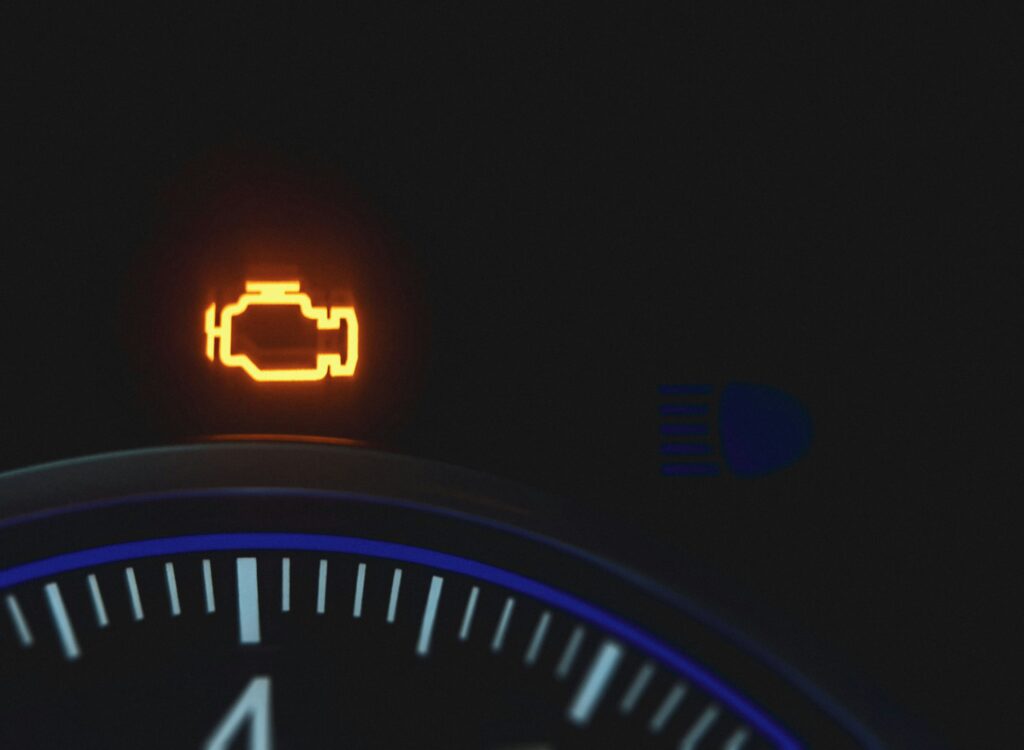
For example, a code may point toward:
- Misfire detection
- Oxygen-sensor-related faults
- Evaporative emissions problems
- Catalyst efficiency
- Airflow or fuel-system issues
- Various sensor or circuit problems
But one diagnostic trouble code shouldn’t look like a shopping list.
For example, getting an O2 sensor code through a scan tool should not automatically lead you to the fact the O2 sensor is bad. A wiring problem, a leak within the exhaust system, an air and fuel problem or any number of other conditions may cause an O2 sensor related code to show up. Knowing why a code is present is what leads to the proper fix.
Why Clearing the Code Isn’t the Same as Fixing the Problem
A diagnostic scanner can often clear stored trouble codes.
But clearing the warning does not repair the underlying fault.
If the condition remains, the vehicle may eventually illuminate the light again.
Clearing codes can also remove useful diagnostic information that a technician could have used to understand what happened.
For that reason, don’t repeatedly erase the warning just because it is inconvenient.
If the problem is repaired, clearing the code and completing the appropriate drive cycle may be part of the diagnostic process. That should be done as part of an informed repair rather than as a substitute for one.
Check Engine Light vs. Other Dashboard Warnings
A check engine light should not be confused with every other warning on the dashboard.
For example:
| Warning | General Meaning | Typical Response |
| Check engine light | Engine/emissions-related fault detected | Diagnose the stored fault |
| Oil pressure warning | Possible oil-pressure problem | Stop safely and investigate promptly |
| Engine temperature warning | Possible overheating | Stop safely and address overheating |
| Battery/charging warning | Charging-system problem | Arrange prompt inspection |
| Brake warning | Brake-system or parking-brake issue | Check immediately according to manual |
| Tire-pressure warning | Low or abnormal tire pressure | Check tire pressures |
The exact meaning varies by vehicle, so your owner’s manual should take priority.
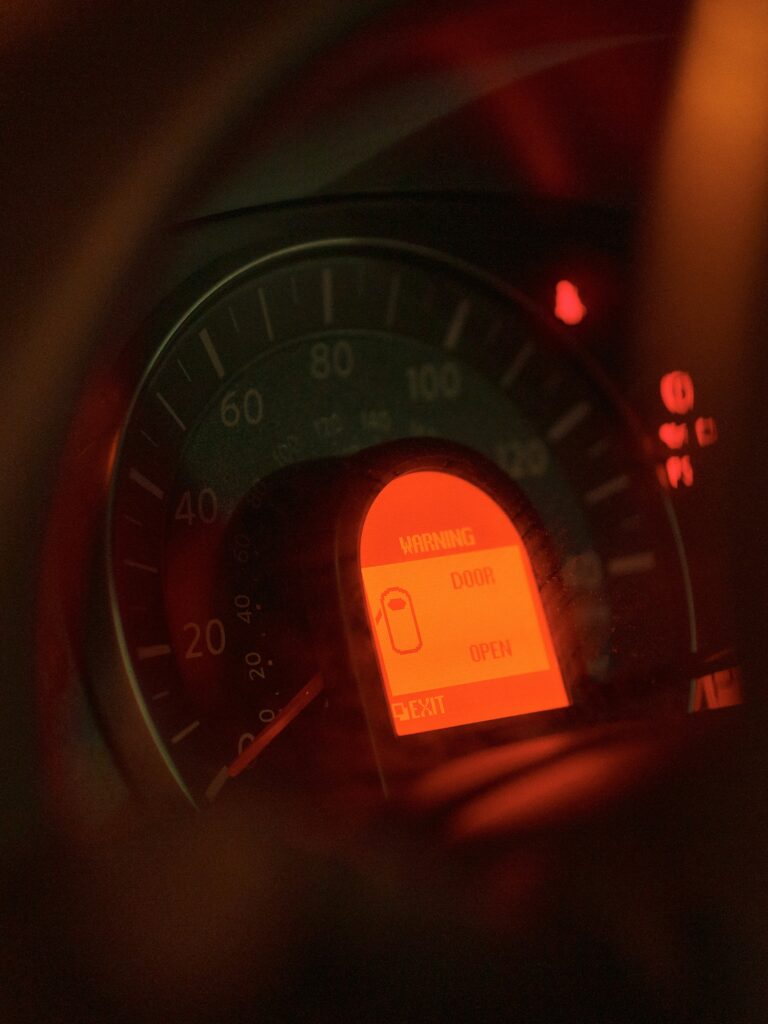
A check engine light also doesn’t override more urgent warnings. If an oil-pressure or overheating warning appears alongside the check engine light, that may require immediate action.
What Can Cause the Check Engine Light After Refueling?
If the warning appears shortly after filling the vehicle with fuel, inspect the fuel cap if your vehicle uses a conventional cap.
Make sure it is installed correctly.
A fuel-system leak can trigger an emissions-related diagnostic fault.
However, the timing alone doesn’t prove that the fuel cap is responsible. Other faults may happen to appear after refueling.
If the light stays on, diagnostic scanning is more reliable than repeatedly removing and reinstalling the cap.
Check Engine Light After an Oil Change
An illuminated warning after an oil change can be unrelated to the oil service, but timing is worth investigating.
Possible explanations include:
- A connector was disturbed
- A component was accidentally disconnected
- An existing fault appeared around the same time
- A separate warning was mistaken for the check engine light
- The vehicle developed another issue
If the engine oil warning light—not the check engine light—appears, treat that as a separate concern because oil-pressure warnings can require immediate attention.
When in doubt, identify the exact dashboard symbol and check the owner’s manual.
What Should You Do First?
If the check engine light comes on, use a simple process rather than guessing.
Start With the Light
Determine whether it is steady or flashing.
Check How the Vehicle Feels
Notice whether the engine is running smoothly and whether acceleration, idle quality, temperature, and starting behavior have changed.
Look for Recent Events
Think about whether the warning appeared after:
- Refueling
- Maintenance
- A battery replacement
- A long trip
- A repair
- Driving through unusually wet conditions
Recent events don’t prove causation, but they can provide useful diagnostic context.
Retrieve the Diagnostic Code
Use an appropriate OBD-II scanner or have a repair facility retrieve the code.
Diagnose Before Replacing Parts
Use the code, symptoms, inspection results, and vehicle-specific information to determine the actual fault.
This approach is usually more effective than replacing components based solely on a code description.
Common Mistakes When the Light Comes On
Ignoring A Flashing Light
A flashing light means that something more serious could happen, and trying to continue using it as normal increases the chances of damage
Replacing Parts Based On A Code
A code could show which system or part has gone bad, but not exactly what failed
Clearing The Warning Light Over And Over Again
This simply clears the warning light without addressing the actual issue
Assuming Everything Is Fine Because It Seems To Drive Fine Otherwise
Sometimes a diagnostic error happens without causing any other issues or odd behaviour in the car other than what was originally apparent
Using Generic Advice Over Specific Advice For The Vehicle Type
The owner’s manual for a car and the repair procedures for different types of cars differ with the type of vehicle, this advice should be taken into account alongside the owner’s manual and diagnostic equipment from the manufacturer
How to Prevent Check Engine Problems
You cannot prevent every diagnostic fault, but sensible maintenance can reduce avoidable problems.
Follow the manufacturer’s maintenance schedule for items such as spark plugs and ignition components:
- Spark plugs
- Engine oil
- Filters
- Ignition components
- Emissions-system maintenance
- Other scheduled inspections
Use the correct fuel and fluids specified for your vehicle.
Address unusual engine behavior early instead of waiting for the warning light to become more serious.
Regular maintenance doesn’t guarantee that a check engine light will never appear, but it can help identify developing problems before they become more complicated.
When Professional Diagnosis Is the Better Choice
Professional help is particularly appropriate when:
- The check engine light is flashing
- The engine is misfiring
- The vehicle has lost significant power
- The engine is overheating
- There is smoke or a strong fuel smell
- The vehicle is difficult to start
- Multiple warning lights appear
- The light repeatedly returns after being cleared
- You cannot determine the cause from basic checks
A professional diagnostic process can include scanning the vehicle, examining live sensor data, checking wiring and connectors, inspecting mechanical components, and performing targeted tests.
That is more useful than simply replacing whichever part seems associated with the stored code.
Final Thoughts on Check Engine Light Causes
Understanding check engine light causes is less about memorizing a list of possible failures and more about knowing how to respond intelligently.
Even though the warning can be an indication of simple as a fueling problem, however, it also can identify an ignition, fuel, delivery, emissions-control, and catalyst-control or other engine controlling failure. Any crucial thing to think of is, a flashing light compared to a stable light in a running vehicle; and has the vehicle experienced different symptoms? Even a steady light of normally driven automobile may require your own examination, in contrast, a quick moving car light or any serious concern about how to drive might have to obtain priority and also take care off in time.
Instead of simply erasing that alert then wishing this does not persist and appear all over again.
It would better to consider to bring a diagnostic assistance to see, just consider the symptoms of the car including past driving occurrences, then decide upon its specific cause. That method can eventually enable save you resources that might include pointless components substitutes and your possibility to resolve a predicament accordingly would certainly go really good.
FAQs About Check Engine Light Causes
1. What are the most common check engine light causes?
Common causes can include fuel-system or evaporative-emissions malfunction, oxygen sensor issues, ignition-system problems, engine misfires, airflow obstructions, catalytic converter malfunction, and various sensor or electrical issues. The underlying reason has to be diagnosed based on the information retrieved from the malfunction indicator light.
2. Is it safe to drive when the check engine light comes on?
A steady illumination is typically not an immediate cause for concern, but a flashing light should be taken seriously. If the light is flashing or the car is otherwise not operating normally, avoid driving it until it has been diagnosed by a professional mechanic.
3. Can a loose gas cap cause the check engine light to come on?
It can, if the vehicle in question has an evaporative emissions control system that is designed to register the anomaly. However, it is only a partial solution at best – a professional inspection is needed regardless.
4. Can low engine oil cause a check engine light?
Low engine oil can cause serious issues, but depending on the vehicle, a separate warning light may be used for this condition. In any case, it is extremely important that you consult your owner’s manual and confirm which exact illumination you are dealing with.
5. Should I clear the check engine light myself?
Clearing the code will not address the underlying issue, and can potentially cause more problems. It is a good idea to attempt to identify the issue before attempting to clear it, and only then proceed to do so.