When the catalytic converter check engine light appears on your dashboard, it is easy to assume the converter itself has failed. Sometimes that is the case, but the warning light does not automatically prove that the catalytic converter needs replacement.
Current vehicles haveOBD (On-Board Diagnostic) systems to monitor emissions related functions such as catalyst efficiency. The system can identify an issue with the emissions related component and trigger a Malfunction Indicator Lamp (which most are aware of as a ‘check engine light’). In practice, the actual difficulty can be identifying the cause of the malfunction lamp without spending money to fix the wrong thing. A catalyst-efficiency code could potentially be associated with the converter itself but oxygen sensors, exhaust leaks, misfires, fuel mixtures, or others could also be the cause.
What Does a Catalytic Converter Do?
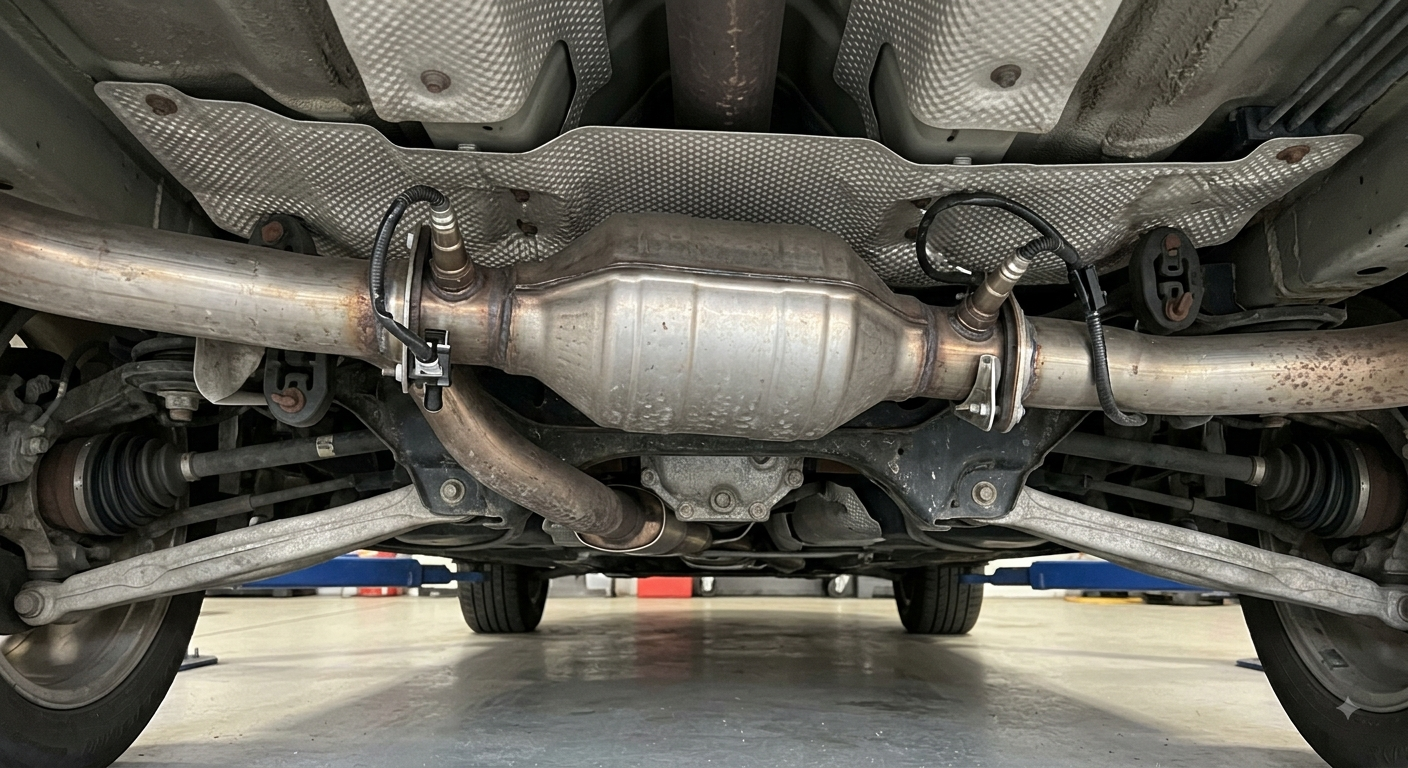
Catalytic converter. What it does A catalytic converter is a device fitted into a vehicle exhaust and emissions system. Its function is to help transform some harmful contaminants found in engine exhaust into less noxious forms before they are released from the tailpipe.
As it is a part of a car’s emissions system, the onboard diagnostic (OBD) system in the car helps to regulate performance of your car’s converter, with the EPA reporting on its Web site that the OBD systems monitor catalyst performance alongside another variety of emissions components and systems.
If the car’s computer identifies that the emission systems’ operation falls outside the normal range, it can trigger an illumination of the Check Engine light. However this does not always indicate your vehicle’s catalytic converter has literally become broken.n.
Why Does a Catalytic Converter Trigger the Check Engine Light?
This scenario is a very common one and is related to a diagnostic trouble code relating to a catalyst-system efficiency below threshold. P0420 is typically used for a catalyst-system efficiency below threshold for bank 1; though related codes may exist for other catalyst-monitoring conditions.P0420 is classified in EPA documents as a diagnostic trouble code concerning catalyst efficiency. The computer does not only monitor if an exhaust flow exists passing through the converter but uses sensors to see if the emissions control system is performing as designed; which is why a direct replacement is not always the best initial move.
Common Causes Behind a Catalytic Converter Check Engine Light
Several different problems can lead to catalyst-related warning codes.
A Worn or Damaged Catalytic Converter
Catalytic converters wear out.
If the vehicle takes a hit underneath where the converter is located, this can have an impact. Because the converter is on the bottom of the car it is vulnerable to road debris and direct impact (Cars.com). It might make odd noises and degrade engine performance as well.e.
Oxygen Sensor Problems
Oxygen sensors make it possible for the engine-management system to monitor the condition of the catalyst.
If one of them is not working properly, the vehicle’s computer can store information related to the malfunction of the catalyst.
Thus, when a technician discovers such a code, he should not conclude that the converter has failed, but need to check all systems to see if everything is in working order.
Exhaust Leaks
An exhaust leak can affect the sensor readings, making it impossible to accurately assess the state of the catalyst.
In this case, it is necessary to look for the source of the leak, which may be located near the oxygen sensor, since this type of malfunction often occurs. In addition, a leak in the exhaust system is one of the reasons for the appearance of the message related to the malfunction of the catalyst.
Misfire
A misfire that is not being addressed can enrich the exhaust gases with combustible components. As a result, there may be a malfunction of the catalytic converter and emissions system. According to the EPA, a blinking check engine light suggests the possibility of a serious malfunction, such as a misfire that could damage the catalytic converter.
Fuel or Air-Mixture Issues
The inability of the engine to maintain the proper amount of fuel and air mixture results in improper exhaust gas composition, leading to engine malfunctions, emissions problems, and trouble codes.
A diagnostic code associated with catalytic converter failure may also suggest an air-delivery problem in the engine.
Symptoms of a Bad Catalytic Converter
A catalytic converter problem doesn’t always produce obvious symptoms.
Sometimes the first noticeable sign is simply the check engine light.
Other possible symptoms can include:
- Reduced acceleration
- Poor engine performance
- Unusual exhaust odor
- A rattling noise underneath the vehicle
- Reduced fuel economy
- Difficulty maintaining normal engine performance
Cars.com identifies poor acceleration, unusual exhaust odor, and a check engine light among symptoms associated with catalytic converter problems.
However, these symptoms aren’t exclusive to catalytic converter failures.
That distinction matters because replacing an expensive component without confirming the diagnosis can waste money.
What Does P0420 Mean?
P0420 is a diagnostic trouble code associated with catalyst efficiency below the expected threshold.
It is one of the codes that can lead to a catalytic converter check engine light.
But P0420 should not automatically be interpreted as:
“The catalytic converter definitely needs replacement.”
Instead, it means the vehicle’s diagnostic system has detected a catalyst-efficiency problem that needs further diagnosis.
A technician may inspect sensor data, exhaust components, wiring, engine operation, and other possible causes before deciding whether the converter itself has failed.
Can You Drive With the Catalytic Converter Check Engine Light On?
What does this depend on It all depends on the other symptoms. A check engine light is usually steady and often just serves as notification the vehicle has sensed a malfunction that needs to be looked at. Check the Federal Register for an explanation that the check engine light means “ OBD – Malfunction of onboard diagnostic system has been indicated.”
According to the EPA, there are six possible messages associated with a malfunction indicator light (MIL) that flash, including a severe engine misfire which can damage the catalytic converter.
If your vehicle is experiencing this warning, don’t hesitate: “ severe engine misfire that’s likely to cause damage,” it recommends seeing a technician immediately.According to the EPA, a flashing warning light combined with serious engine performance issues or power loss means you should arrange for the vehicle to be towed.
Steps to Take When the Warning Light Comes On
Don’t immediately purchase a catalytic converter.
Start by determining the diagnostic trouble code.
An OBD diagnostic scan can reveal the code stored by the vehicle’s computer.
The code is a starting point, not necessarily the final diagnosis.
For instance, if there is a catalyst efficiency code generated by the scan, the first troubleshooting step should be finding out why the system is reporting it as being inefficient. A trained technician can access relevant service information and vehicle diagnostics in order to diagnose this issue. According to EPA’s existing “Freedom to Repair” policy, manufacturers make emissions service information, OBD-I/OBD-II data, and diagnostic tools available to all repair professionals.
Why You Shouldn’t Replace the Converter Based Only on a Code
Catalytic converters can be expensive, so it is easy to guess wrong and pay for unnecessary repairs.
Say your car is throwing a code for catalyst efficiency.
If the converter is truly faulty, then it will be fixed by replacing it, but if the real problem is an exhaust leak, bad sensor, or running condition, then the same code is likely to appear again.
The proper way to diagnose the problem is to check for the cause of the code, not just assume that the converter is bad, especially if the car is throwing multiple codes.
If the car is throwing a code for misfire or fuel-system related problems along with the catalyst code, then it would be wise to check those problems first before replacing the converter.
Can a Bad Catalytic Converter Cause Poor Acceleration?
Yes it can be. A poor and restricted or damaged converter could hinder the proper flow of the exhaust and also lead to the proper functioning of the engine performance not functioning well. Cars.com said as a matter of fact, catalytic converter problems might lead to slow acceleration or even to further damaging conditions to the engines performing function.
Nevertheless, it must also be stated here that poor acceleration can also lead to other possible conditions such as the system fuel deliveries, transmission problems, air blockage, and also many other engine problems.
In that aspect, you might have acceleration problems together with an indicator for the engine warning, it’s actually a sign that a proper diagnosis should be made than just conclude it has to be catalytic converters.
What About a Rattling Noise?
Look for an undercarriage rattling sound
Faulty catalytic converters sometimes fail internally and some of their internal components start to move, or rattle around inside the catalytic converter housing.EPA documentation in the past for some specific vehicle models included a MIL illuminating when setting P0420 and rattling under the car. However,other exhaust components can make an undercarriage rattle sound as well. A mechanic must examine the system to locate the culprit.
How a Professional Diagnosis Usually Works
A proper diagnostic process may consist of several steps.
Read Diagnostic Trouble Codes
The technician should first start by scanning for any stored or pending codes.
Check for Any Additional Relevant Codes
Some codes may indicate problems with the engine, oxygen sensors, fuel control, and the engine misfiring.
Look Over the Exhaust System
The technician should check for any signs of damage and leaks in the exhaust system.
Check Sensors
By using the vehicle diagnostic equipment, the technician can check how sensors are operating and how the vehicle’s catalyst is monitoring the engine.
Check if the Engine is Operating Properly
The mechanic should check if the engine misfires, and if the fuel mixture is burning incorrectlyIf an issue is identified, it is important to have it addressed.
Check Whether the Catalyst is Defective
Only after the above steps should the technician consider replacing the catalytic converter if there are sufficient grounds for doing so.
Catalytic Converter Replacement Is Not Always the First Repair
The correct repair depends on what caused the warning.
| Possible Problem | Possible Direction of Repair |
| Exhaust leak | Locate and repair the leak |
| Faulty oxygen sensor | Diagnose and replace if confirmed defective |
| Engine misfire | Diagnose ignition, fuel, or engine issue |
| Fuel-mixture problem | Identify and correct underlying cause |
| Damaged catalytic converter | Replace converter when confirmed |
| Loose exhaust component | Repair or replace affected component |
This is why the diagnostic process matters more than the warning light’s name.
What Can Happen If You Ignore the Light?
While the initial repair solution could be fairly inexpensive, failing to address a triggered Check Engine light may cause more damage in the future and create an extremely expensive fix down the road. As the EPA points out, an existing but neglected OBD-identified vehicle condition may also result in fuel wastage; shorter engine life span; more polluting vehicle operation; or even added vehicular damage. An issue pertaining to your vehicle’s catalytic converter also suggests your automobile is unable to do the job of regulating how much pollutants it is expelling.
A malfunctioning converter can contribute to a considerable rise in pollutants released by the vehicle.
When an vehicle has an emissions-related warning, you are better advised to solve the issue than merely clear out the warning code.
Don’t Try to Hide the Warning Light
Just clearing the trouble code without fixing the problem at the root isn’t a solution. The check engine light can come back on when the diagnostic computer runs the applicable monitoring tests again. Tampering with emissions controls will also result in your own personal legal and environmental issues; the EPA has pursued enforcement action against devices used to eliminate the check engine light illuminating even when emissions controls fail. Diagnose and fix the problem.
Check for Recalls and Warranty Coverage
3. Check for an applicable warranty or recall on your specific vehicle prior to paying for an expensive catalytic converter replacement. Vehicle eligibility varies based on make and model, model year, component, location, manufacturer recall or service program. The U.S. Environmental Protection Agency (EPA) website offers further info and can tell you if there is any particular vehicle on the EPA voluntary recall list or about any service program or warranty extension that you can have applied before you pay a bunch for a repair to your vehicle that could, technically, come under recall on your car.
How to Avoid Future Catalytic Converter Problems
A catalytic converter doesn’t operate independently of the engine.
Maintaining the engine and addressing warning signs promptly can help protect the emissions system.
Pay attention to:
- Persistent check engine lights
- Engine misfires
- Poor engine performance
- Unusual exhaust smells
- Sudden changes in fuel economy
- Exhaust noises
- Physical damage underneath the vehicle
If the engine develops a problem that affects combustion, repairing it promptly is important because continued abnormal operation can place additional stress on the emissions system.
Final Thoughts on the Catalytic Converter Check Engine Light
A catalytic converter check engine light can point toward a catalyst-efficiency problem, but the warning doesn’t automatically prove that the catalytic converter itself needs replacement.
Trouble codes like P0420 mean the vehicle’s On-Board Diagnostics system senses catalyst efficiency outside the expected range. – Auto parts store technician “Honestly, the smartest thing anyone can do before purchasing a part is to perform the proper diagnosis,” the technician said, emphasizing “proper diagnosis. O2 sensors, exhaust system damage, Misfire (spark plug issues), fuel mixture issues, actual physical damage or the catalyst going bad will all need to be ruled in or out.
“Often, when people come in complaining about poor fuel mileage, that code indicates that something in the system may not be working properly ” complaining about fuel smells out the back,” she adds. Replacing the part may clear the issue temporarily, but the same code could return if the root cause remains unresolvedn bad has not been fixed.”
Pay attention to your check engine light to make sure it is not flashing at you, as that could mean there is a misfire strong enough to ruin your catalyst before the code fully sets, says Patrick. “It’s usually one of two things, and nine out of 10 it’s a combination: There is a fueling problem or there’s an ignition problem,” Patrick says, referring to a lean code like P0171 which can bring out P0420 to get ready. “Or there’s a restriction/leak in your exhaust,” he says.
If the light is on, get the diagnostic code read, document any additional symptoms, and have the vehicle properly evaluated. And before authorizing an expensive emissions repair, check for applicable recalls or warranty coverage.
FAQs About Catalytic Converter Check Engine Light
1. Does check engine light always mean catalytic converter?
No, check engine light may be triggered due to various reasonsA catalyst-efficiency code does not eliminate the need for a complete catalytic converter diagnosis.This is explained by the fact that there might be various causes that lead to it.
2. What code is for catalytic converter?
P0420 is the most common catalyst-efficiency code that may appear. In any case, the specific code and its meaning depend on the car’s engine. According to the EPA guidelines, the problem may be identified by the term catalyst-efficiency DTC.
3. Can catalytic converter be caused by O2 sensor?
It is possible that the O2 sensor or its circuit malfunction triggers the catalytic converter error. In case of any problem with the oxygen sensor, the emission-related diagnostic trouble codes appear. In reality, a comprehensive inspection is required to identify whether the issue is associated with the sensor or catalyst.
4. Is it safe to drive with catalytic converter check engine?
A driver should not worry about the steady check engine light. In case of an intermittent light, the car may still be driven but with caution. On the contrary, if the flashing light is accompanied by a rich condition, the problem with catalytic converter may be triggered.
5. Could a catalytic converter cause loss of acceleration?
In case the catalytic converter becomes damaged, its restricted flow may lead to a loss of power. On the other hand, various other issues may cause the same symptoms and should be considered.